

Speed River
The Great Lakes have higher micro plastic contamination than the Great Pacific Garbage Patch. Most of the plastic and microplastics that end up in the Great Lakes start their lives further upstream — the tributaries flowing into the Great Lakes have a higher microplastic contamination level than the lakes themselves, and their levels of contamination spikes immediately after storms.
With this in mind, I went out on the Speed River Trail after the massive overnight storms. The small creeks that flow in the Speed River were overflowing and the areas immediately surrounding the creeks were full of plastic bottles, bags, and Styrofoam. The biggest find was a Walmart shopping cart that was right by the creek — it was a handy find because I was able to fill it with about about three large bags worth of garbage.
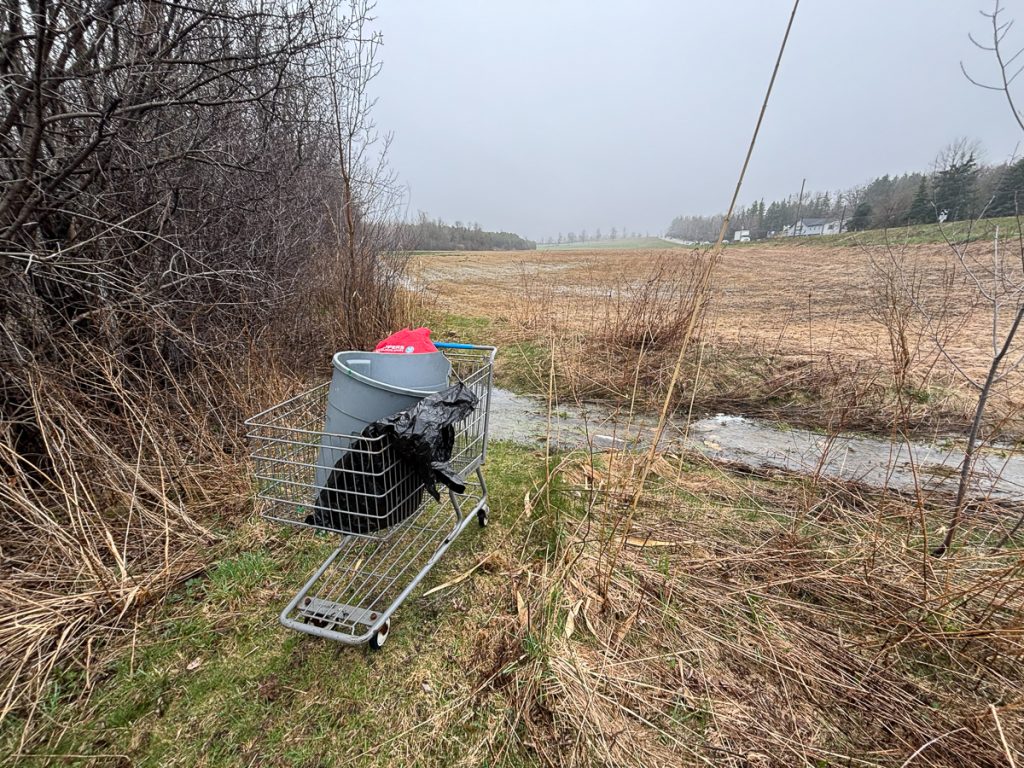
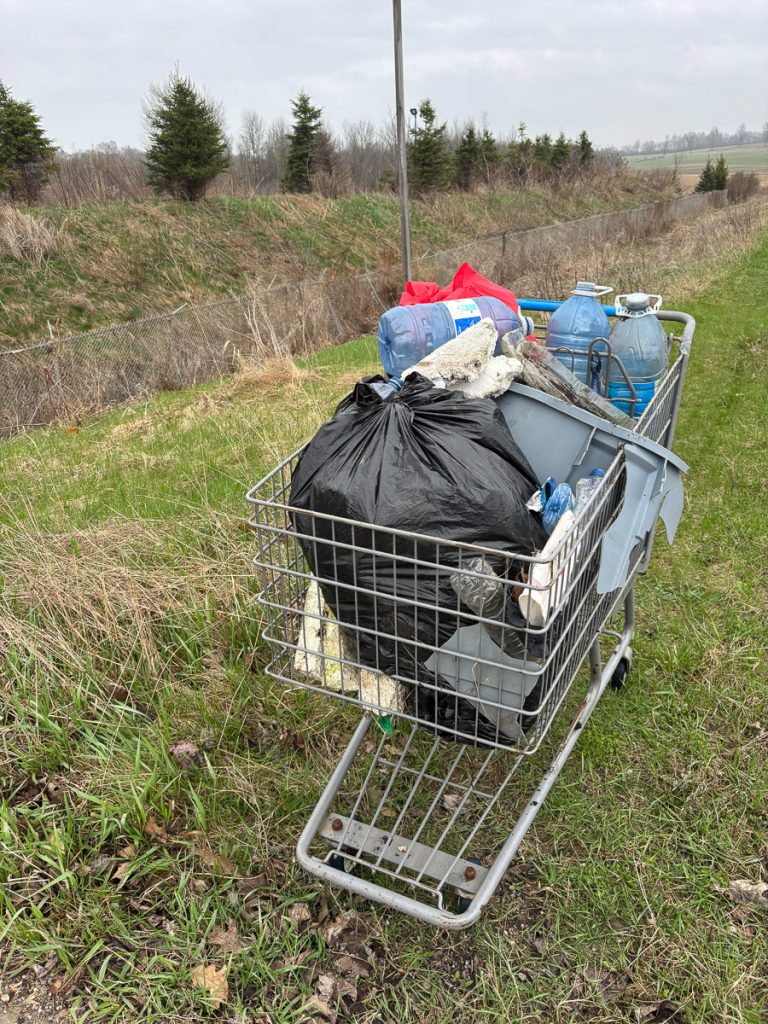
In a bit over an hour I removed about 42kg of waste (including the shopping cart) from the trail and recycled 45 cans and bottles.
Of course, a lot of the microplastics that wash into rivers consist of fragments from tires and clothing and are too small for us to pick up in a shopping cart. A lot of the pollution that enters our waterways is systemic. But it’s still worth removing some of the larger, visible macro plastics that will quickly become microplastics if allowed to float downstream.


Notable Finds
Large Walmart shopping cart; Recyclables: 16 cans, 29 bottles