

Part 2: 442 Cigarette Butts
Yesterday, with rain in the forecast, I headed back to the area uphill from the Speed River Trail to pick up more litter, focusing specifically on cigarette butts.
When I started this project, my goal was to see how many days it would take to fill a reasonably sized jar.
I should have said hours.
In roughly two hours of work over two days, I filled the jar with 442 cigarette butts from just one short stretch near the trail. Between nearby bus stops and a Tim Hortons, the area was so dense with debris that filling the jar turned out to be far easier than I expected.
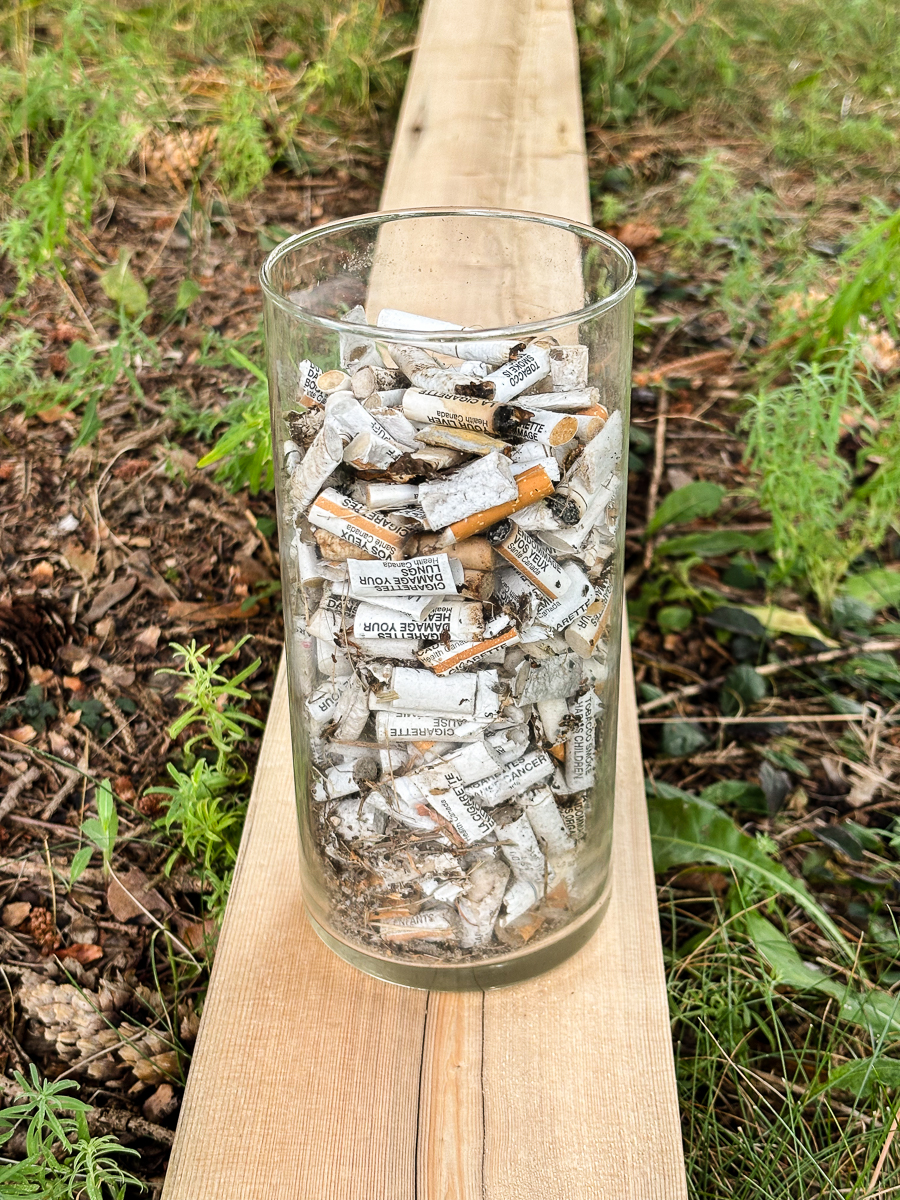
Cigarette butts are the kind of litter you have to train your eyes to see. A shiny can catches your eye from ten meters away; butts require you to look closer. But they’re also the piece of litter that punches far above its weight in environmental damage, especially on a slope sitting directly above a river.
Cigarette filters are made of cellulose acetate, a synthetic plastic that breaks down into thousands of toxic microplastics rather than biodegrading. Worse, a smoked filter acts as a sponge, holding onto heavy metals, arsenic, and dozens of other chemical toxins. When it rains on a slope like this, those contaminants wash straight down into the Speed River.
We’ve started separating and collecting these butts so they can be recycled through TerraCycle, which permanently locks away the toxins rather than sending them to a landfill.
How You Can Help: To keep this momentum going and stop these pollutants before they reach the water, we’re fundraising $215 to install and regularly maintain a permanent TerraCycle cigarette receptacle near the Speed River Trail, and we’ll be happy to share more information soon.


Notable Finds
442 Cigarette Butts; Recyclables: 8 cans, 18 bottles